Week 1 in one page: three models, one Matryoshka suite
What we read, built, redrew, challenged, and shared about Matryoshka LM Suites.
 Niv Cohen · October 26, 2026 · edit this page
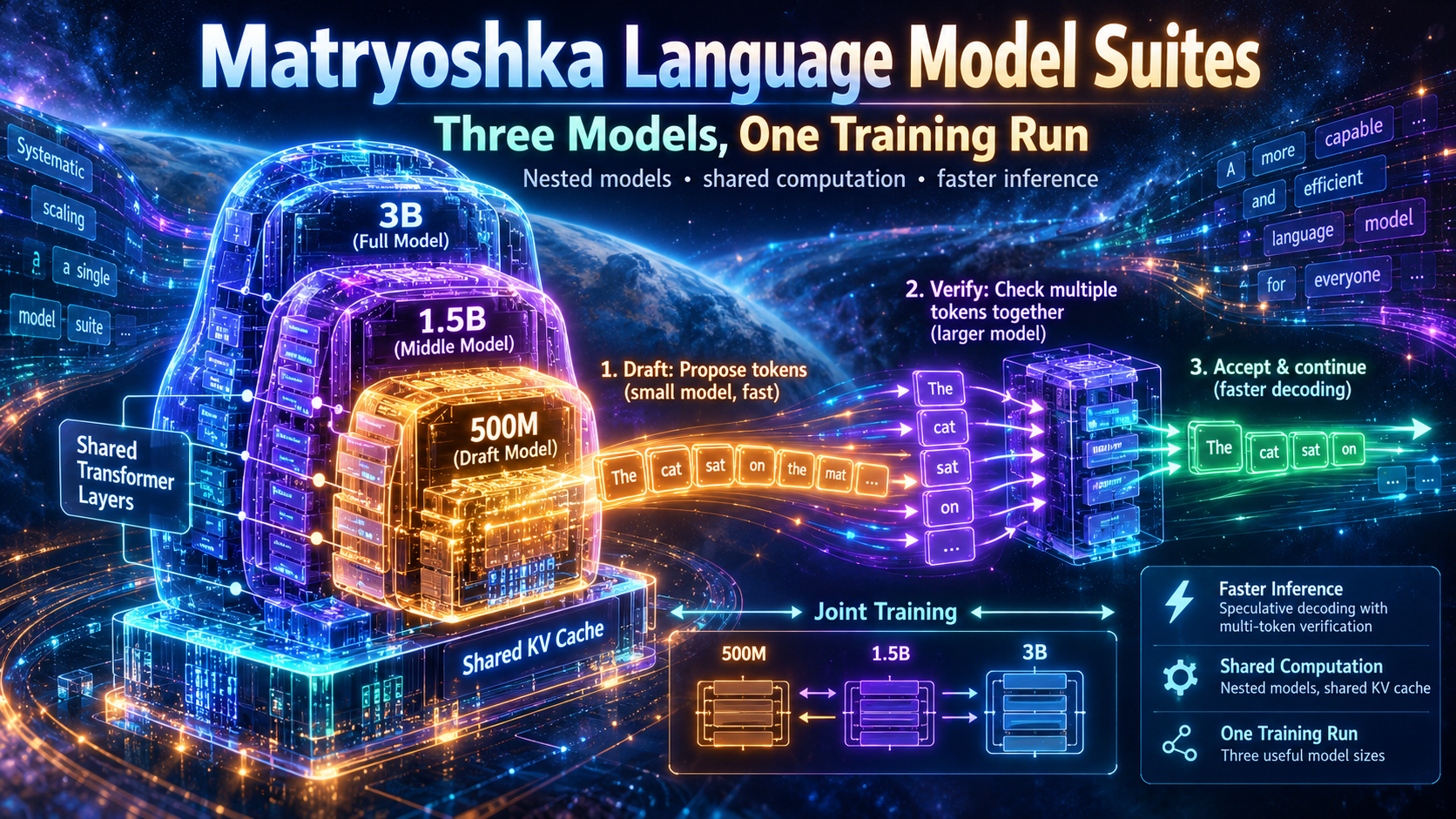
Week 1’s collective reading of Matryoshka Language Model Suites, by Nathan Godey and Yoav Artzi.
The paper in three sentences
A conventional language-model suite trains models at different sizes separately; Matryoshka instead nests 500M, 1.5B, and 3B models in shared Transformer blocks, with a deployable exit at each size. The paper reports 36% less suite-training compute at near-parity benchmark accuracy, with joint training and online distillation from the largest exit to the smaller ones. In its evaluated 500M-draft/3B-verifier setting, the nested suite also improves speculative-decoding throughput by 14–26% versus a separately trained pair, though several factors contribute to the gain.
What we made
✍️ Writing: making the claims intelligible
The writing contributions tackled different bottlenecks. The methods copyedit clarifies that each block has its own width and fresh embedding channels, while each sub-model is the composition of blocks up to an exit. The introduction copyedit works on the opening narrative. Three abstract rewrites approach accessibility from different directions: why suites matter, what the baselines are, and making technical terms accessible. The three points that matter collects the headline takeaways: how the model suite is nested, what training costs are saved, and why this may help speculative decoding.
A recurring lesson is to explain what is being compared: 3.2B versus 5.2B is a reduction in total suite parameters, not the same number as 36% less training FLOPs; and the reported decoding gain compares particular draft–verifier implementations, not every possible speculative-decoding system.
🧠 Learning: distillation beyond this paper
The learning from reasoning traces goes beyond this week’s model-suite paper to ask when a teacher’s intermediate reasoning steps make a task easier for a small student to learn. That connection is worth exploring, but should not be confused with a result of Matryoshka itself, which distills next-token predictions rather than demonstrating chain-of-thought transfer.
📊 Visualization: choose the explanation that clicks
Several classmates drew different pictures of the same nested architecture. The diagrams highlight different aspects of the same mechanism: shared blocks, model exits, and the width-changing junction.
Figure 1 — Independent suites versus nested exits
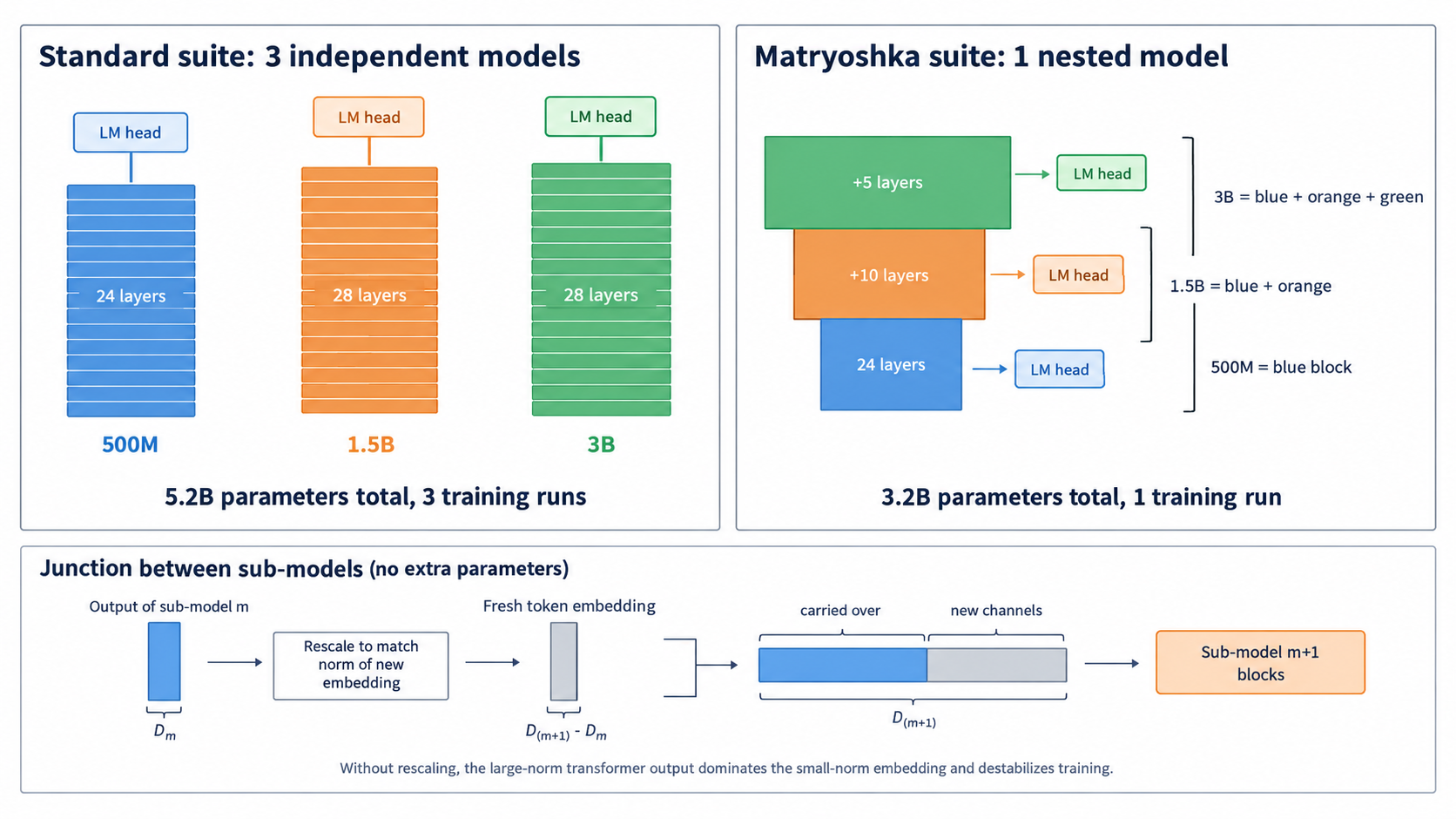
independent-versus-nested overview: a direct comparison of three separate models with one shared nested suite.
Figure 2 — Architecture, distillation, and efficiency at a glance
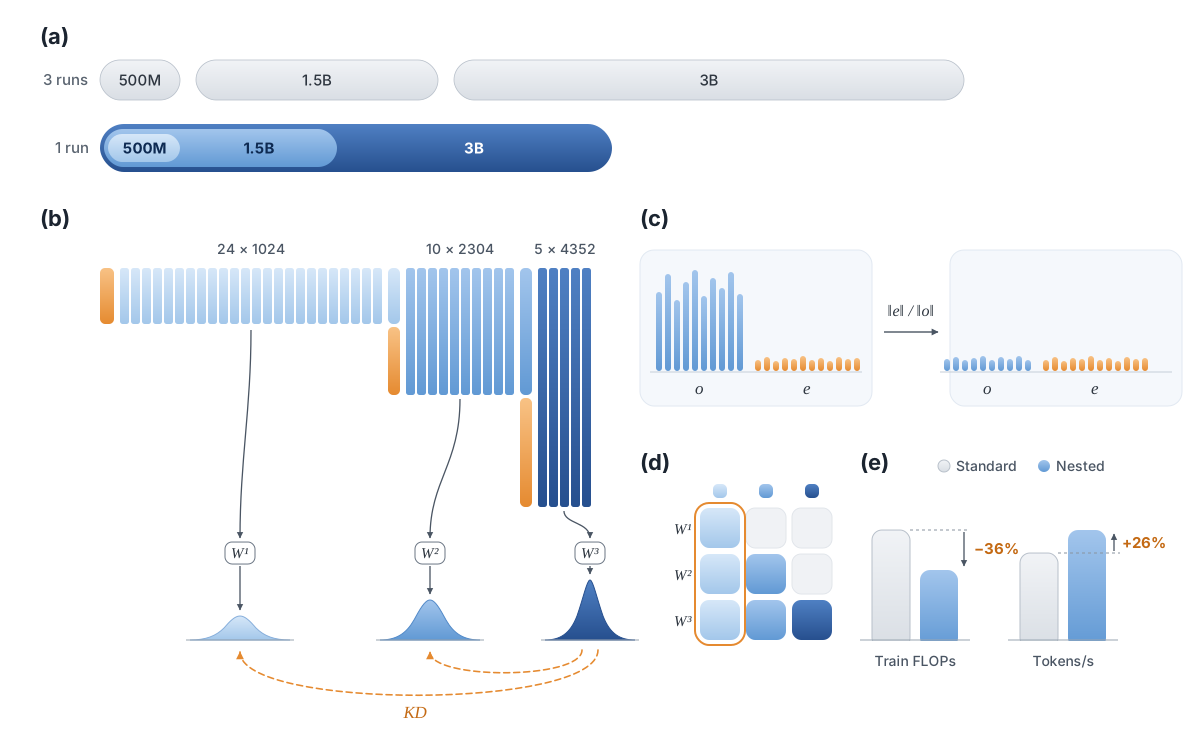
five-panel core-ideas visualization: a denser view of the same mechanism and its reported savings.
Figure 3 — Interactive model flows
Select 500M, 1.5B, or 3B inside the diagram to trace each model’s path. Open the interactive architecture at full size. Created for the class’s interactive model-flow and junction visualization.
Figure 4 — Junction close-up
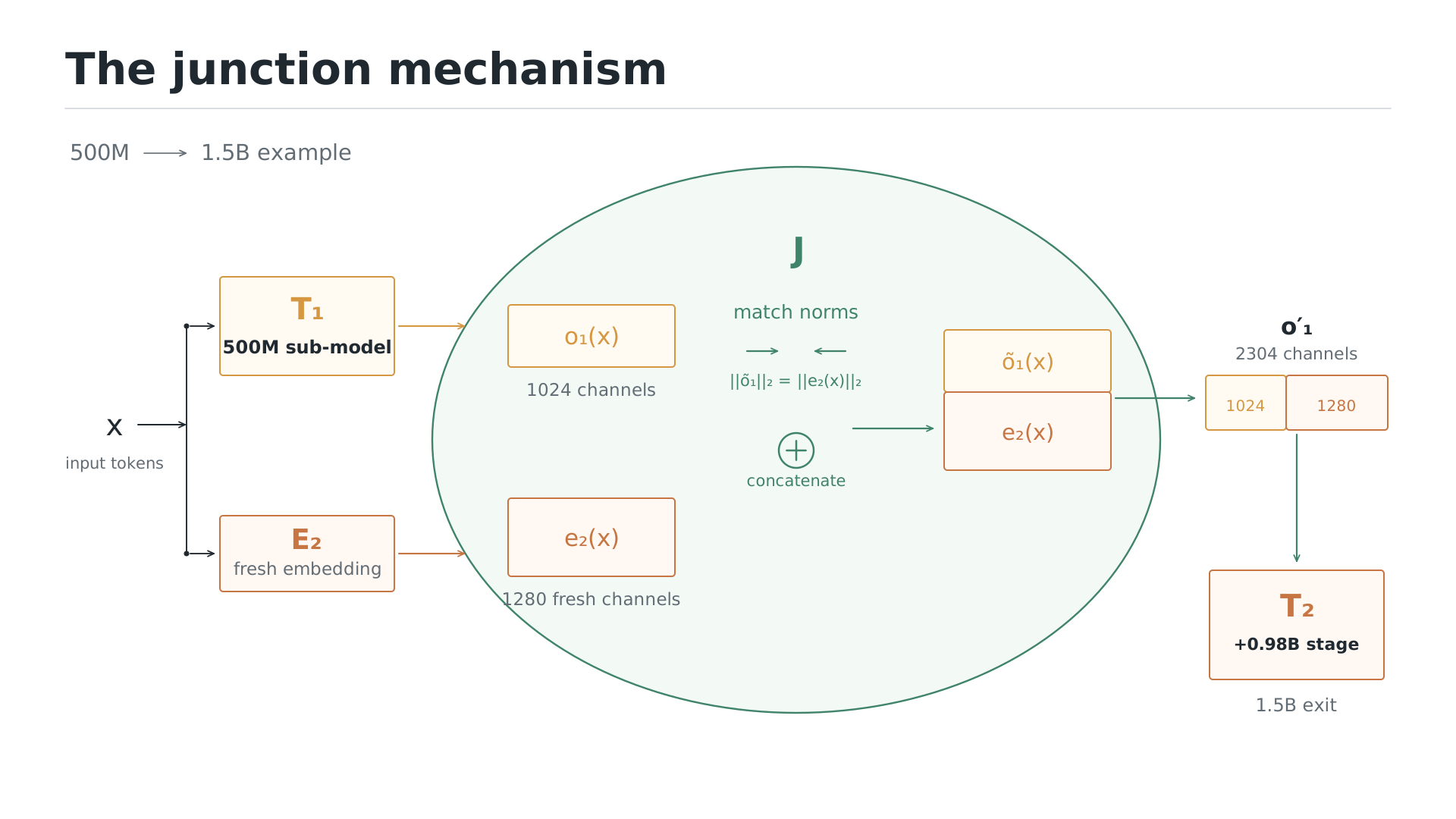
The complementary static diagram from the interactive model-flow and junction visualization shows how the hidden-width mismatch is resolved.
The same principle—show the trade-off, not just the mechanism—guided two redesigns of the paper’s architecture-search figure. The original uses ternary plots; the Figure 2 with readable layer counts makes layer counts and possible hidden dimensions explicit, while the memory–FLOPs scatter redesign switches to a memory-versus-FLOPs scatter plot.
Figure 5 — Original paper architecture-search plot
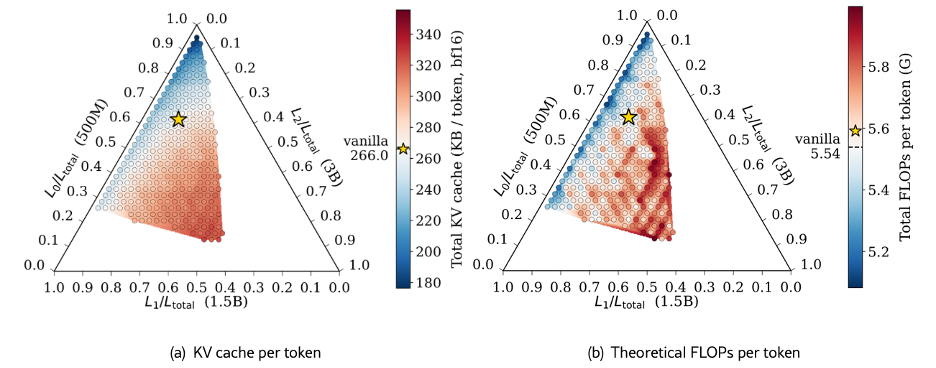
Figure 6 — Annotated architecture-search plot
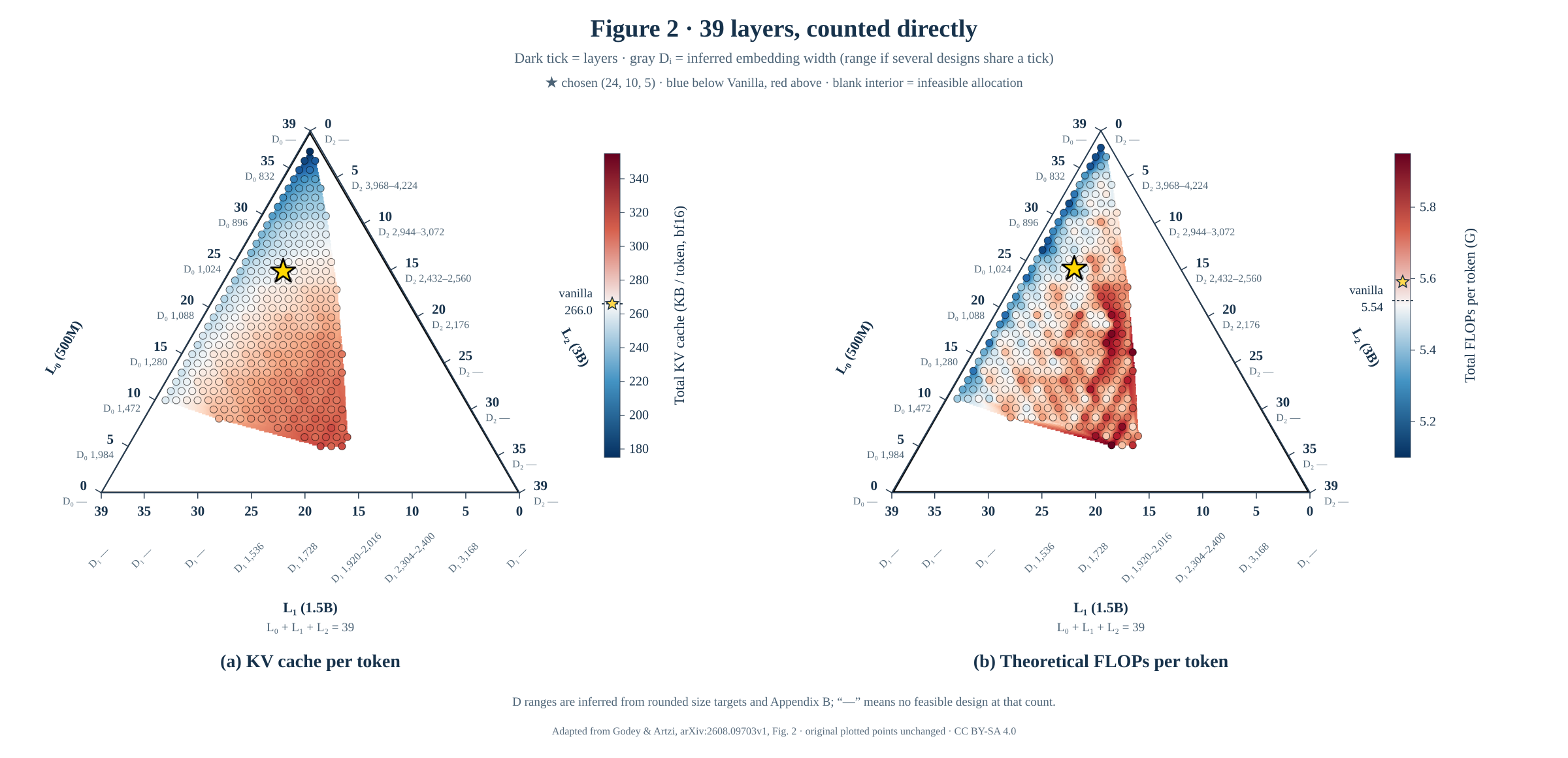
Figure 6 makes the chosen (24, 10, 5) layer split easier to read. Scalable SVG.
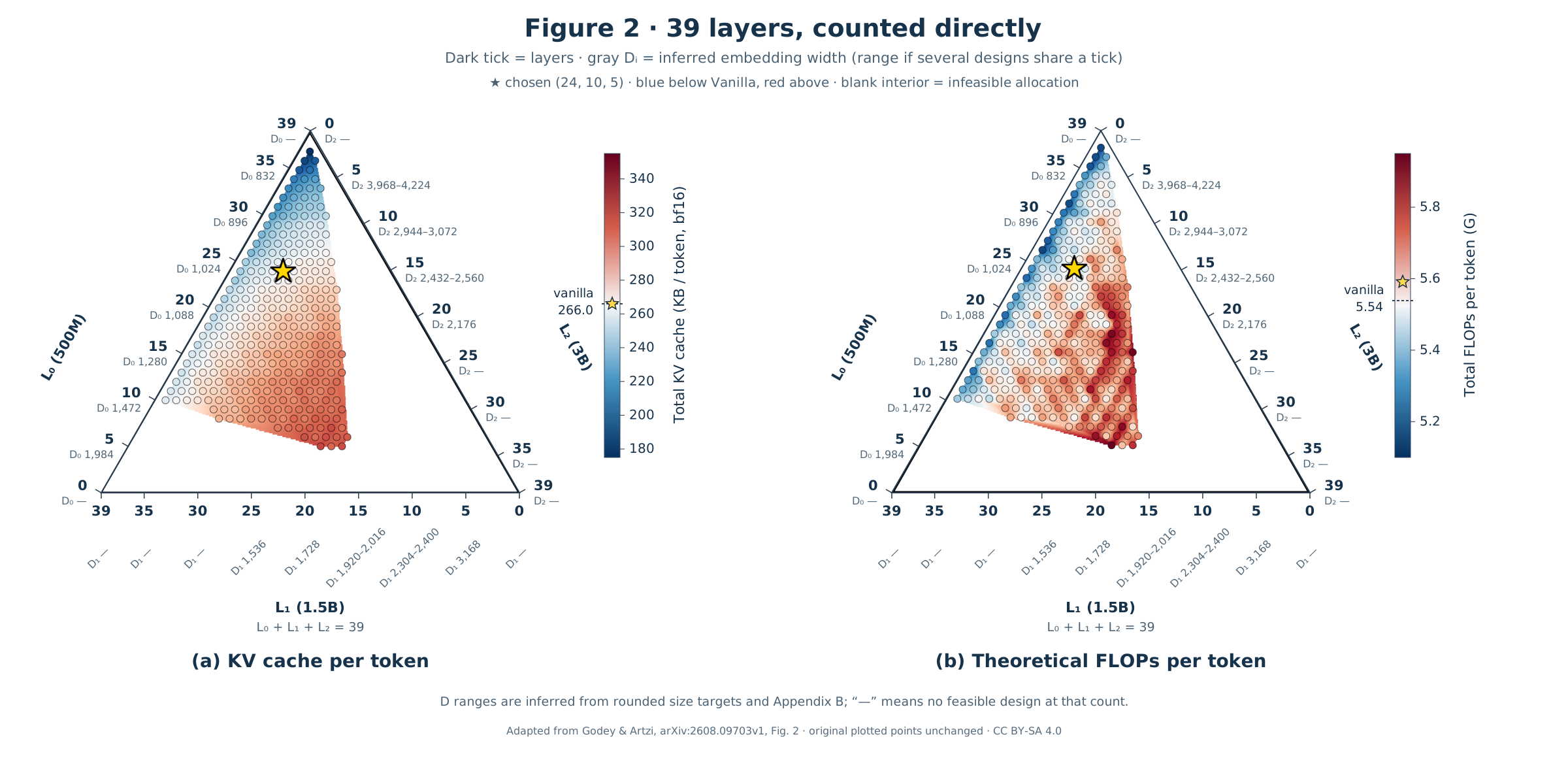
Figure 7 — KV-cache memory versus FLOPs
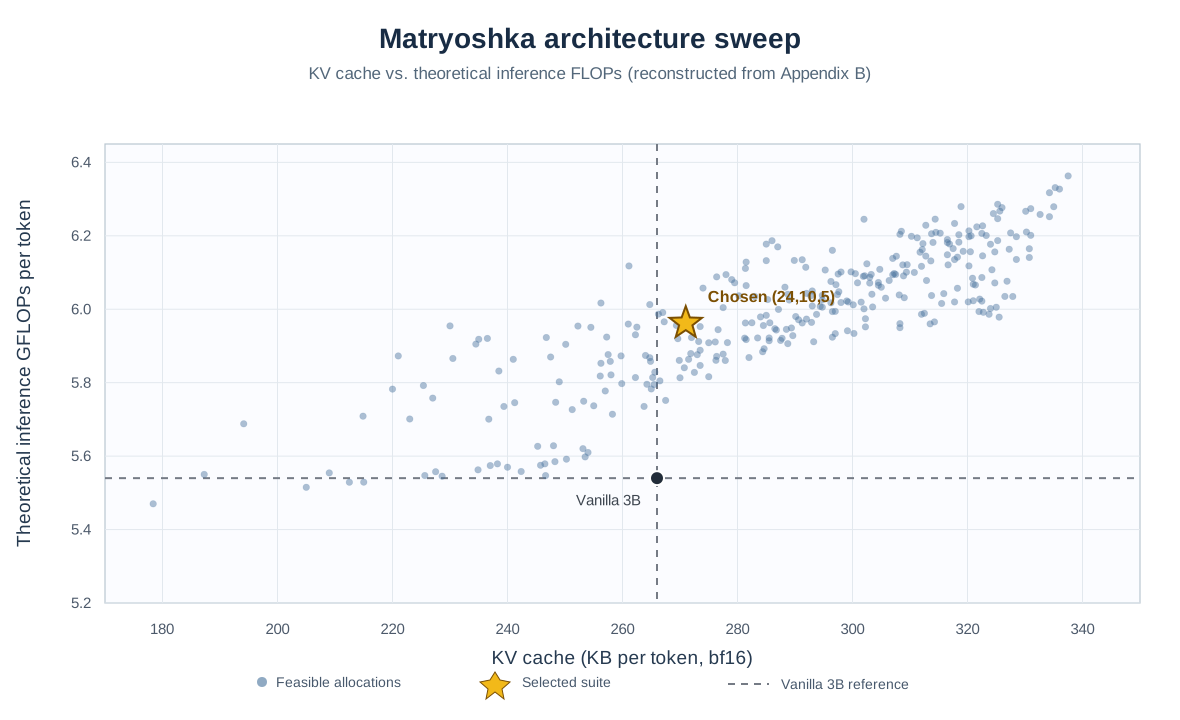
This static SVG was reconstructed from the memory–FLOPs scatter redesign’s Chart.js data. Click the figure for the original interactive chart and its hover details. These are theoretical resource estimates, not measured decoding-throughput curves.
🔬 Research: where the paper fits, what to challenge
The two literature reviews approach the surrounding ideas from complementary angles. The research foundations maps speculative decoding, knowledge distillation, and elastic architectures. The historical and architectural connections traces Matryoshka Representation Learning → MatFormer → this suite, including why a width- and depth-changing layer-prefix architecture matters for KV-cache use. Together, they help distinguish the paper’s integration of established ingredients from the ingredients themselves.
Two author-background contributions connect the paper to the authors’ research interests and the authors’ prior architectures: work on representations, architecture, training efficiency, and language-model bottlenecks.
The two critiques also emphasize different points. The critique on the central efficiency claim asks whether distillation is essential and whether the paper’s central efficiency story could be framed more simply. The critique of inference comparisons and experimental scope raises a more extensive list of experimental limitations, notably training duration, baseline selection, repeated runs and uncertainty, post-training, and whether better draft–verifier agreement comes from nesting or from distillation. The paper has partial distillation ablations, but it does not fully isolate those factors with a distilled independent draft–verifier baseline.
The class’s follow-up proposals turn these limitations into possible research. follow-ups on training and inference efficiency prioritizes longer training, fixed-batch and multi-draft decoding comparisons, train-big-then-prune, and draft optimization. follow-ups on interpretability and post-training instead asks what the upper blocks add, whether their input channels can be interpreted, and how post-training affects smaller exits.
A classmate’s question to the authors asked how much of the speculative-decoding throughput gain survives when the two systems use the same batch size. According to the student’s account of their reply, Matryoshka was 10–15% faster at matched batch sizes in additional experiments on different hardware, rising to about 33% when allowed its larger maximum batch. These are author-reported follow-up results, distinct from the paper’s original headline measurements; they suggest that both efficiency at a fixed batch and additional memory headroom matter.
💻 Coding: does a toy reproduce the pattern?
The toy reimplementation trains three nested exits against independently trained toy Transformers with matched model sizes. It uses a small synthetic grammar with long-range dependencies: useful for probing the shape of the result, not for reproducing the paper’s 3B benchmark or measured speedups.
Figure 8 — Nested versus independent models at toy scale
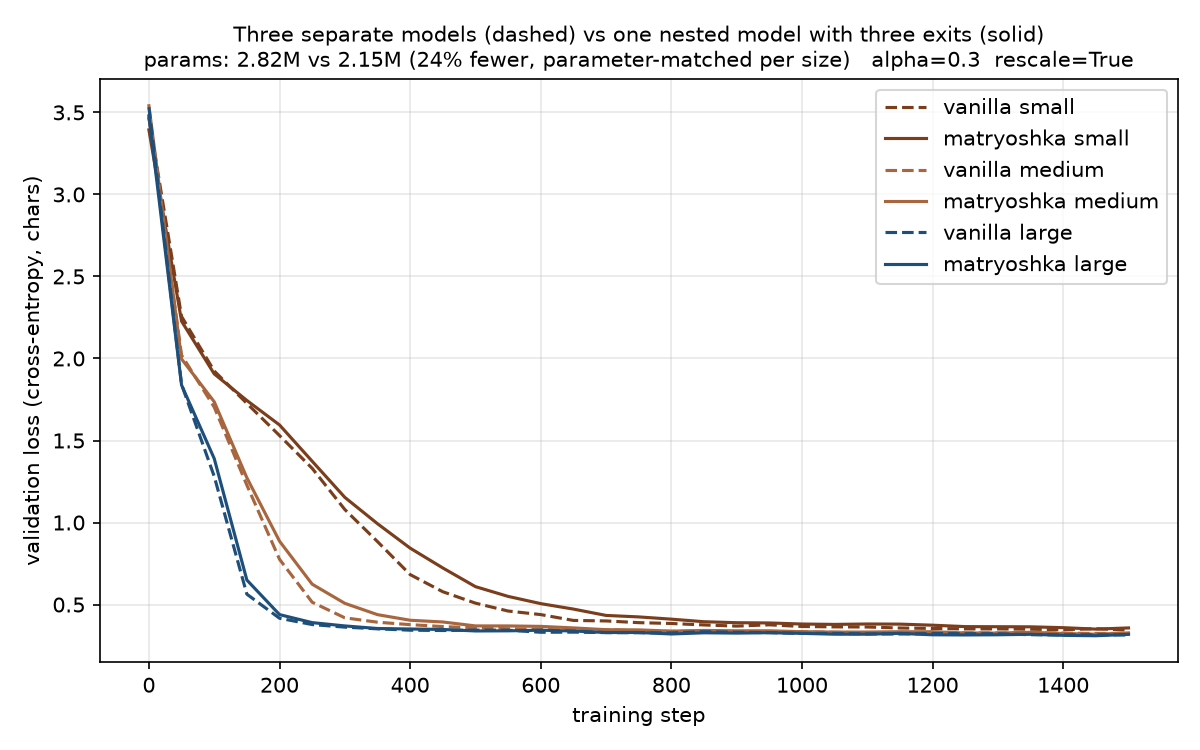
The toy implementation’s validation-loss curves; these are not the paper’s production-scale results.
🔭 Scouting: two directions beyond the assigned paper
The newer distillation and decoding directions surfaces recent work on on-policy distillation and parallel speculative decoding in looped models. The KL and cache-sharing questions asks what forward versus reverse KL may do to student confidence and whether cross-model cache sharing raises alignment concerns. Those concerns come from a different cache-sharing setup and should be investigated, not assumed to hold for Matryoshka’s exactly shared lower layers.
📣 Communication: from the article to a feed
The social-media versions adapt the result for X, Bluesky, Mastodon and LinkedIn—a useful exercise in preserving the core comparison at different lengths. There is also a video explainer.
Video 1 — Matryoshka Language Model Suites: class explainer
What we discussed in class
The live discussion focused especially on how speculative decoding actually works. A small draft model proposes tokens sequentially; a larger verifier can evaluate those already proposed positions together in a causally masked pass. This is compatible with autoregressive language modeling: the verifier is evaluating known candidates, not magically generating unknown future tokens in parallel.
In Matryoshka, the draft and verifier share initial layers and the corresponding KV cache. Their joint training can also increase agreement, while shared memory may permit larger batches. As the critiques and follow-ups emphasize, the measured speedup combines these effects. A classmate’s reported exchange with the authors provides additional fixed-batch evidence, while a comparison with independent models also trained through distillation remains important for isolating distillation from architectural sharing.
All contributions at a glance
Visualizations: Nested suite and junction · Visualizing nested models · Figure 2 with layer annotations · A better Figure 2 · Visualizing core ideas.
Writing and explanations: Methods copyedit · Introduction copyedit · Abstract rewrite A · Abstract rewrite B · Abstract rewrite C · The points that matter · Learning to learn: chain of thought.
Research and critique: Critique A · Critique B · Follow-ups: efficiency · Follow-ups: interpretability · Literature review A · Literature review B · Authors’ paths A · Authors’ paths B · Question to the authors: matched batches.
Experiments and scouting: Toy reimplementation · Hidden gems: speculation and distillation · Scouting: KV sharing and KL.
Communication: Social posts · Video explainer.
Source paper: Godey & Artzi (2026), Matryoshka Language Model Suites.
Enjoy Reading This Article?
Here are some more articles you might like to read next: